


Quentin Vuong: Mercure: Alchemy of Wood and Light
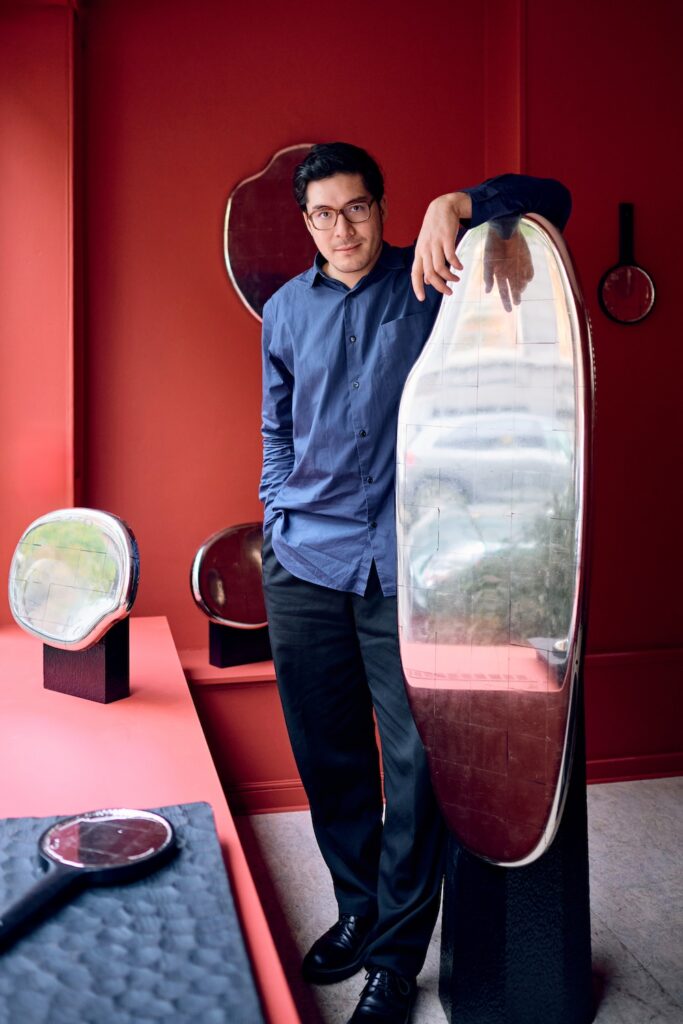
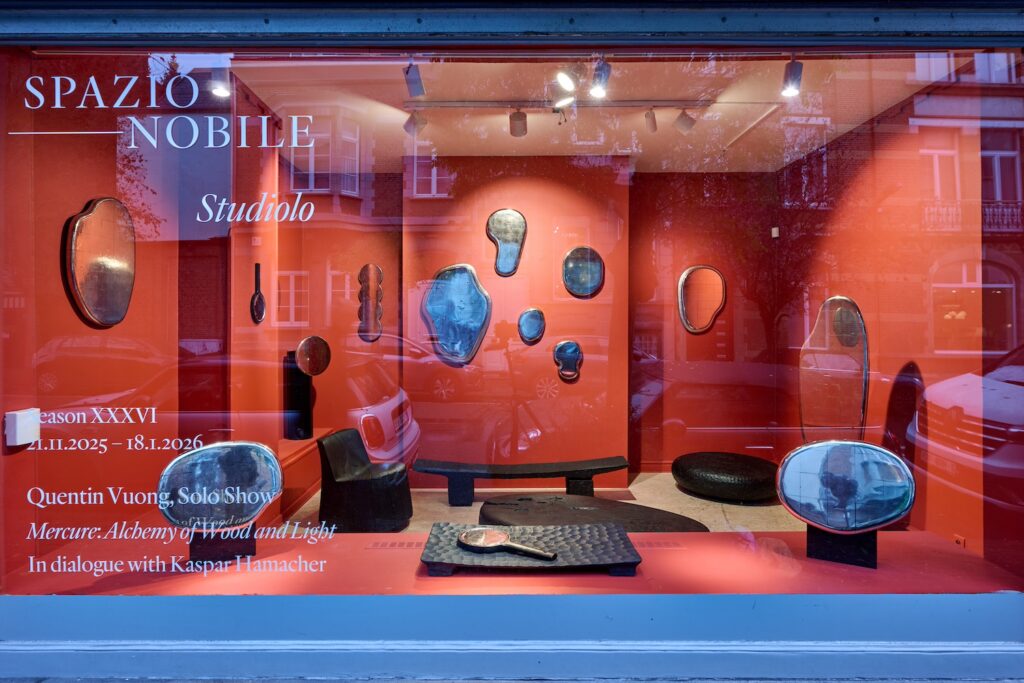
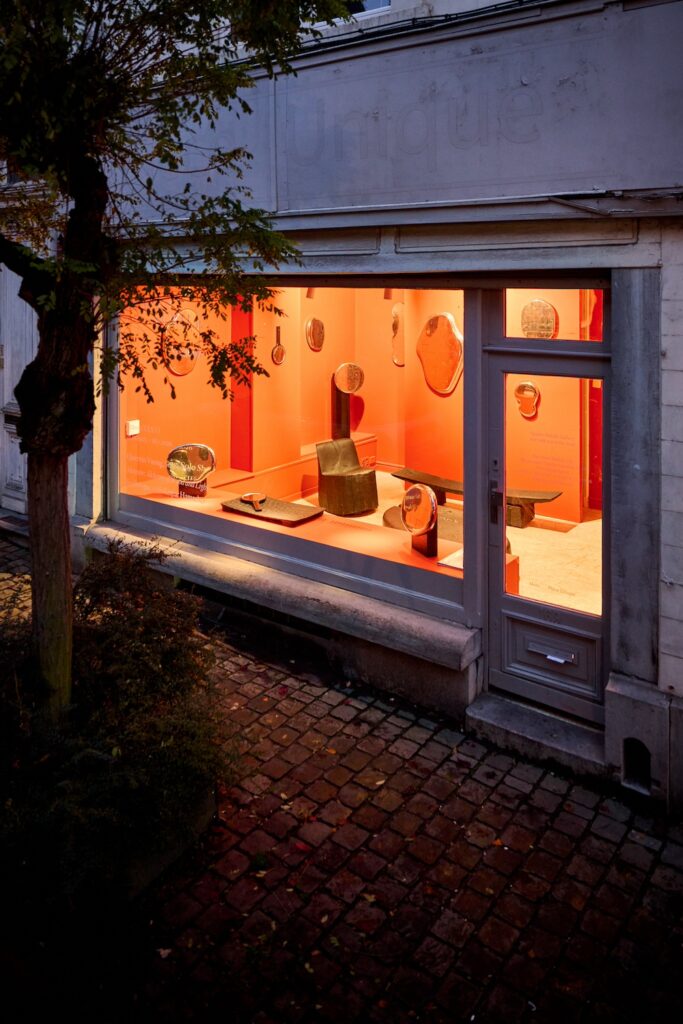
Spazio Nobile Studiolo presents a selection of Quentin Vuong’s alchemical Mercure mirrors, in conversation with sculptural wood forms and collectible furniture by Kaspar Hamacher, as part of the Season XXXVI of Spazio Nobile Gallery. The exhibition is on view through January 18th, 2026.
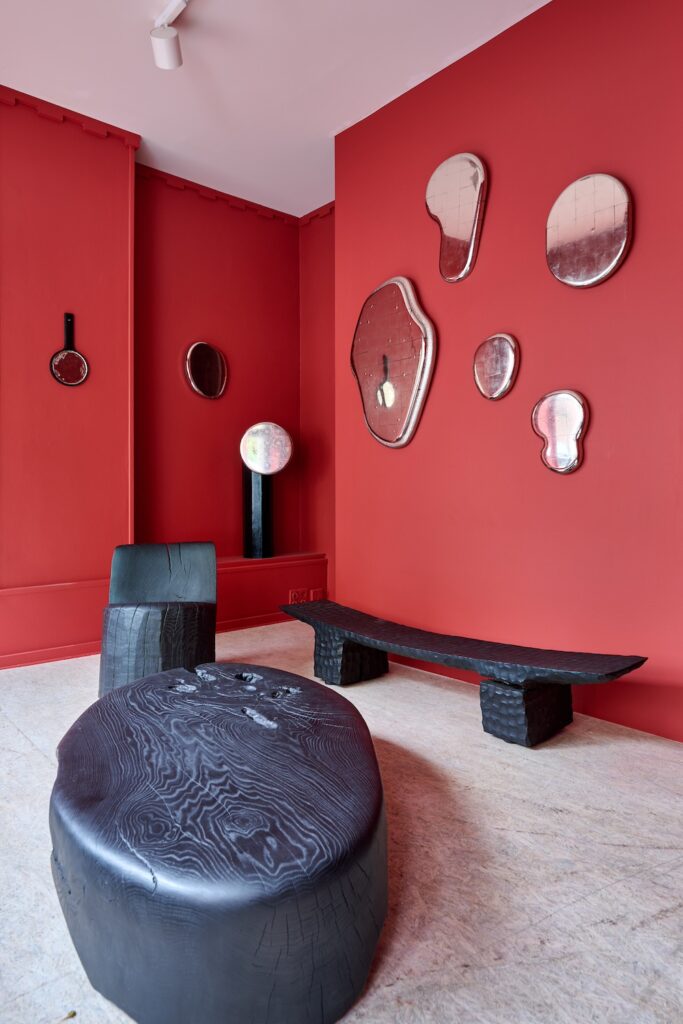
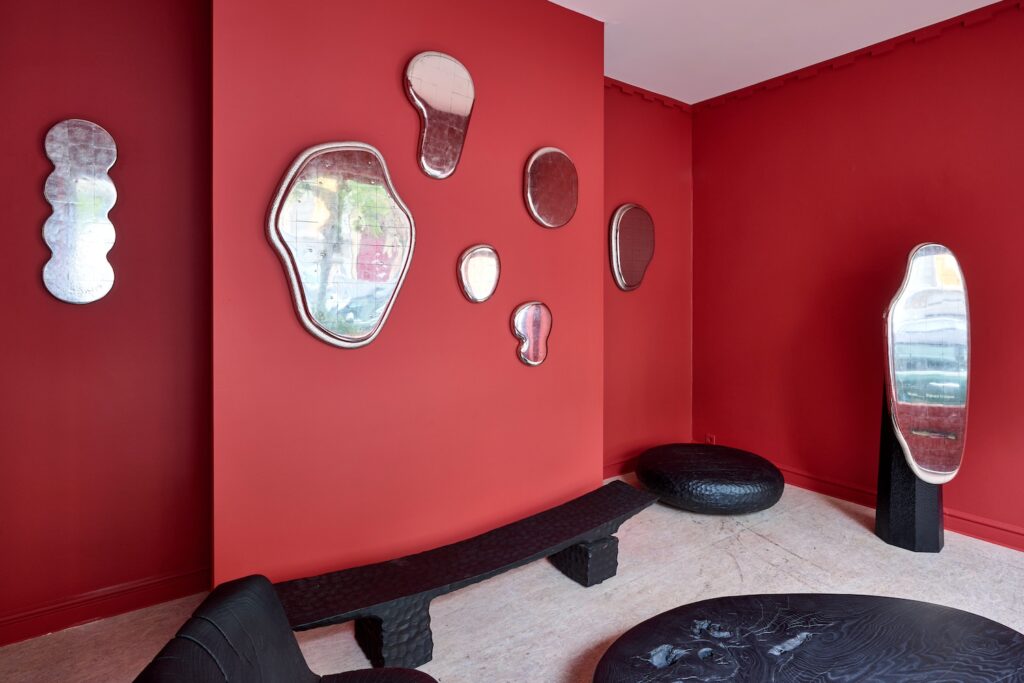
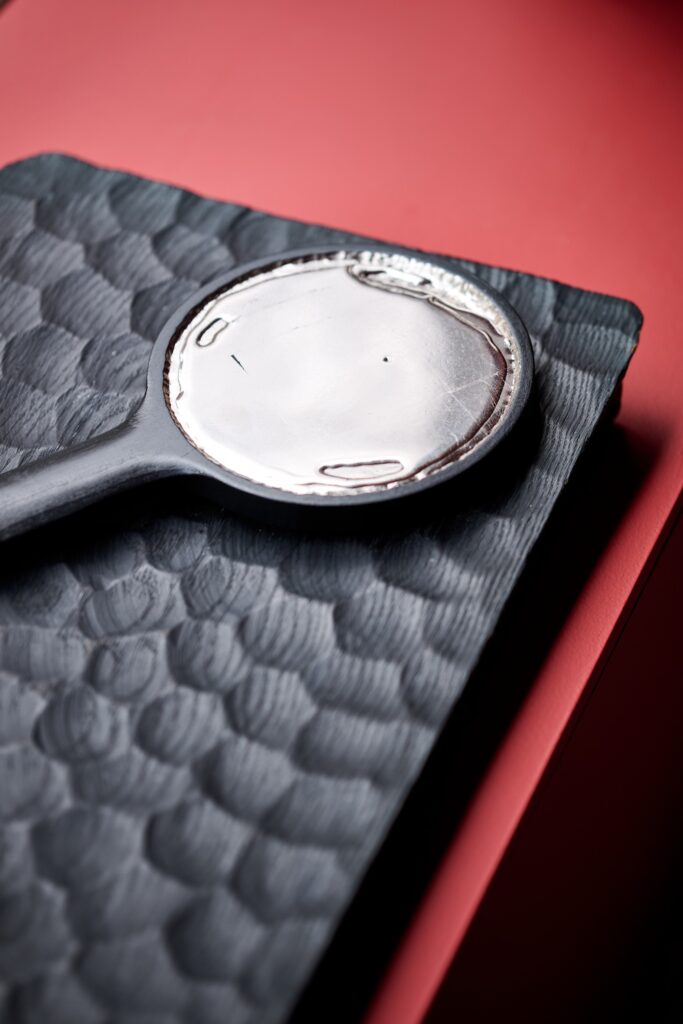
Alchemy is at play in the series of Mercure mirrors by Paris-based designer and artist Quentin Vuong. In a meticulous process, he begins with wood, shaping and sanding blackened and chiseled beech or oak wood onto which he applies layers of resin to create a semi-transparent surface. From here, various formulas of white gold leaf and palladium alloy are applied in a very delicate brushing technique that leads to this semi-reflective, textured surface of the mirrors. Vuong’s extensive education at the Ecole nationale superieure des Arts Decoratifs in Paris is evident in the mirror’s connection to something historical, but yet there is nothing that they can really be compared with. “With Mercure,” writes Lise Coirier in the exhibition catalogue, “Quentin Vuong draws upon mythology, the history of decorative techniques, and the symbolic world of mirrors.”
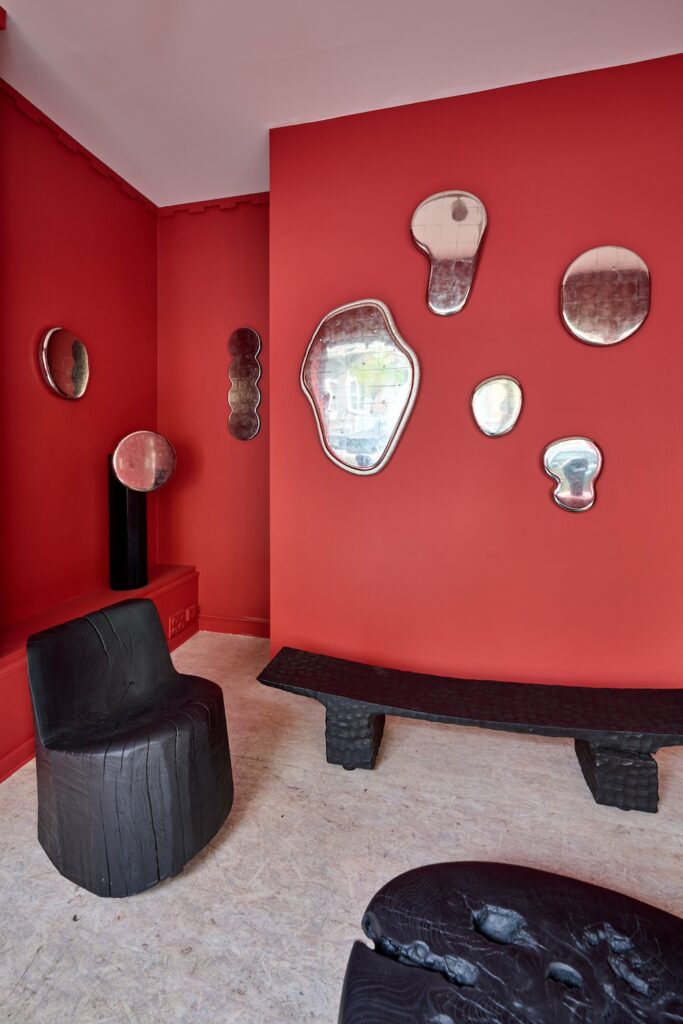
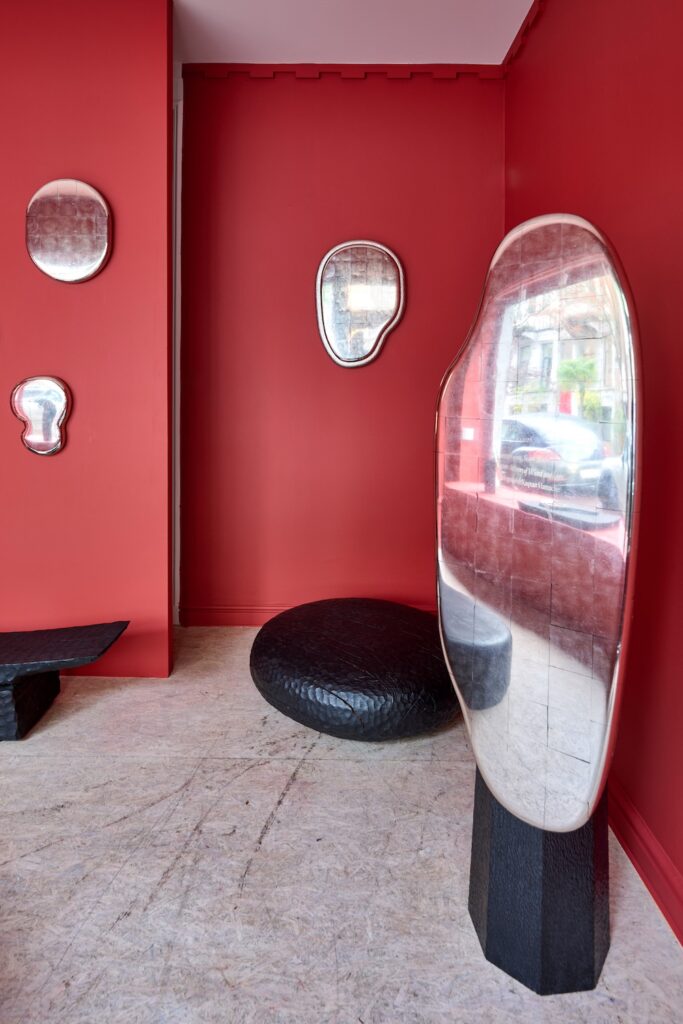
The mirrors are meant to be functional – one can use them for simple reflective tasks such as applying lipstick, and they give off a certain glow against the wall, bringing in a silvery, metallic light to any space. “But,” notes Vuong, “the goal is not to have a perfect mirror.” Rather, he explains, “I was interested in the history of mirrors. We began with seeing our reflection on water, it was a bit misshapen and unstable, and then it was polished stone or obsidian, in beautiful simple shapes, and then metal, such as copper, which had to be polished every day to be able to see in it. I like this idea of having to work or to upkeep something in order to see yourself. It’s a balanced relationship to looking – not like our Instagram age when everything is like a mirror that reflects back our image.” As Coirier writes, “In Roman mythology, Mercury was the messenger of the gods: the master of exchange, movement, commerce, and illusion. This principle flows through Vuong’s collection: the mirror becomes an impermanent surface, suspended between opacity and clarity, presence and absence. What appears at first as a functional object gradually shifts toward the realm of ritual sculpture.”
Each piece in the Mercure series is unique, as is every shape. Rounded or oblong forms that suggest the ripples of water or falling drops of water. As Vuong explains, “I was exploring the shapes of mercury – a shape which is constantly evolving – I am trying to think about something that is liquid but is still heavy, like metallic. It’s a fluid state. The mirrors are set in the Studiolo against a bold red wall and placed in conversation with a selection of collectible furniture and sculptural objects by Belgian designer Kaspar Hamacher. Hamacher works with felled whole pieces of wood and his work has a raw energy about it, with the natural scars, fissures and tensions of the wood appearing on the surface. Both artists share this intuitive relationship to their materials, finding ways to highlight the best of its qualities, yet giving it new form and meaning. It is an artistic dialogue in which the elemental forces of wood, light and material memory come together in exciting ways.
Quentin Vuong: Mercure: Alchemy of Wood and Light and in conversation with Kaspar Hamacher, is on view at the Spazio Nobile Gallery through January 18, 2026.

Articles you also might like
Asia Now returns for its 12th edition with a 5-day program of events and exhibitions at La Monnaie de Paris. The fair takes place between October 20-24th.
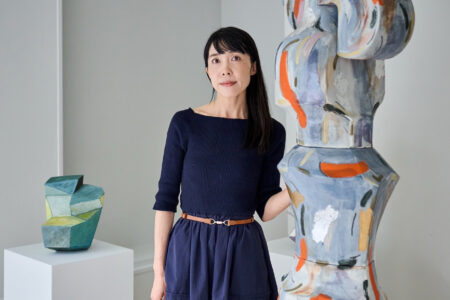
TLmag interviewed Japanese ceramic artist Chisato Yasui after the opening of Monad, an exhibition of her ceramic sculptures at Spazio Nobile Studiolo. The exhibition is on view through November 15th.
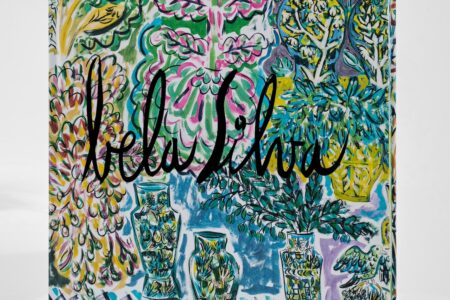
A new artist monograph co-published by Flammarion and Spazio Nobile Gallery invites readers into the captivating world of Bela Silva, the renowned Portuguese contemporary artist and ceramist who is redefining the boundaries of ceramic art. Two book signings are taking place this fall in Paris and Brussels.
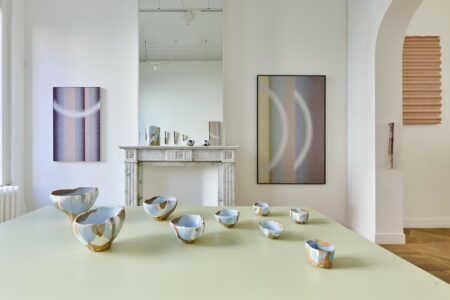
Japanese craftsmanship and contemporary creation on are display in Echoes of Wa, a poetic exhibition at Spazio Nobile that features work by Mae Engelgeer & Japanese Master ceramicist Matsubayashi Hosai XVI.