

Alain Gilles: Gracious Warmth
TLmag spoke to Alain Gilles about pioneering an upholstered glass furniture item, the Chubby stool, on show at Spazio Nobile in Brussels.
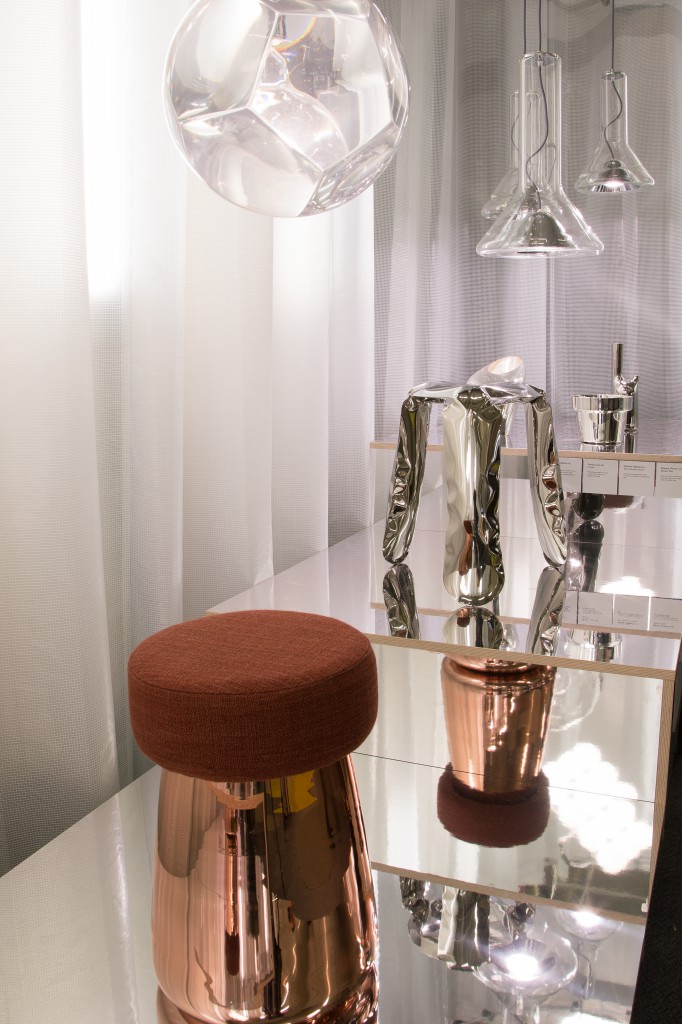
Brussels-born Alain Gilles typifies the sense of rationalised forms and subtle humour inherent in contemporary Belgian design. Founding his practice in 2007, after years working in the financial sector, the designer has since worked with major ‘editors’ like Galerie Gosserez Paris, Magnitude, O’Sun, La Chance and Casamania. Some of his most iconic pieces have garnered accolades such as the prestigious Henry Van de Velde Label. In 2012, Gilles was named Designer of the Year by the hallowed Biennale Interieur. Developed for innovative Czech glassworks Verreum, Chubby employs the age-old technique of silvered-glass to profile the anthropomorphically-shaped stool. The uncommon combination of a curvaceous form, glass on such a large scale and upholstered fabric is intended to evoke a new level of warmth or comfort; not to mention the transformation of material. The base glass element works to reflect its surroundings while the upholstered seat ensures a sense of security. TLmag spoke to Gilles about Chubby’s silver qualities.
TLmag: What is your affinity for silver as both a visual and material composite?
Alain Gilles: Until lately, I never worked with silver as my lexicon of materials tended to be warmer. However, I recently began to explore how colder composites like shiny metals and translucent glass could combine with softer counterparts. Working with silvered-glass posed a new challenge for me. I wanted to see how I could employ these materials to express a touch of authorship.
Your Chubby design features a silver finish. What visual, physical, or metaphoric treatment does this effect allow you to express?
With the Chubby stool, we’ve created the first-ever piece of upholstered glass furniture. I find the juxtaposition of silvered-glass and fabric interesting as it blurs the lines of perception and makes room for new possibilities. The fabric has an appealing matt effect while the blown glass reflects and distorts its surrounding. It turns this small stool into a larger-than-life object. Together, both elements achieve a rich opulent effect. One is an understatement while the other can be seen as an overstatement.
What process did you use to achieve a silver aesthetic?
Verreum was one of the first brands to bring back the old technique of silvered-glass; virtually extinct in the rest of Europe. Historically, this method was used as an inexpensive alternative to solid silver. For Chubby, a glass piece is first blown, double-walled and then silvered from inside; similar to how mirrors are made. The ability to warm up and transform the coldness of clear glass with colour or tone is very satisfying.
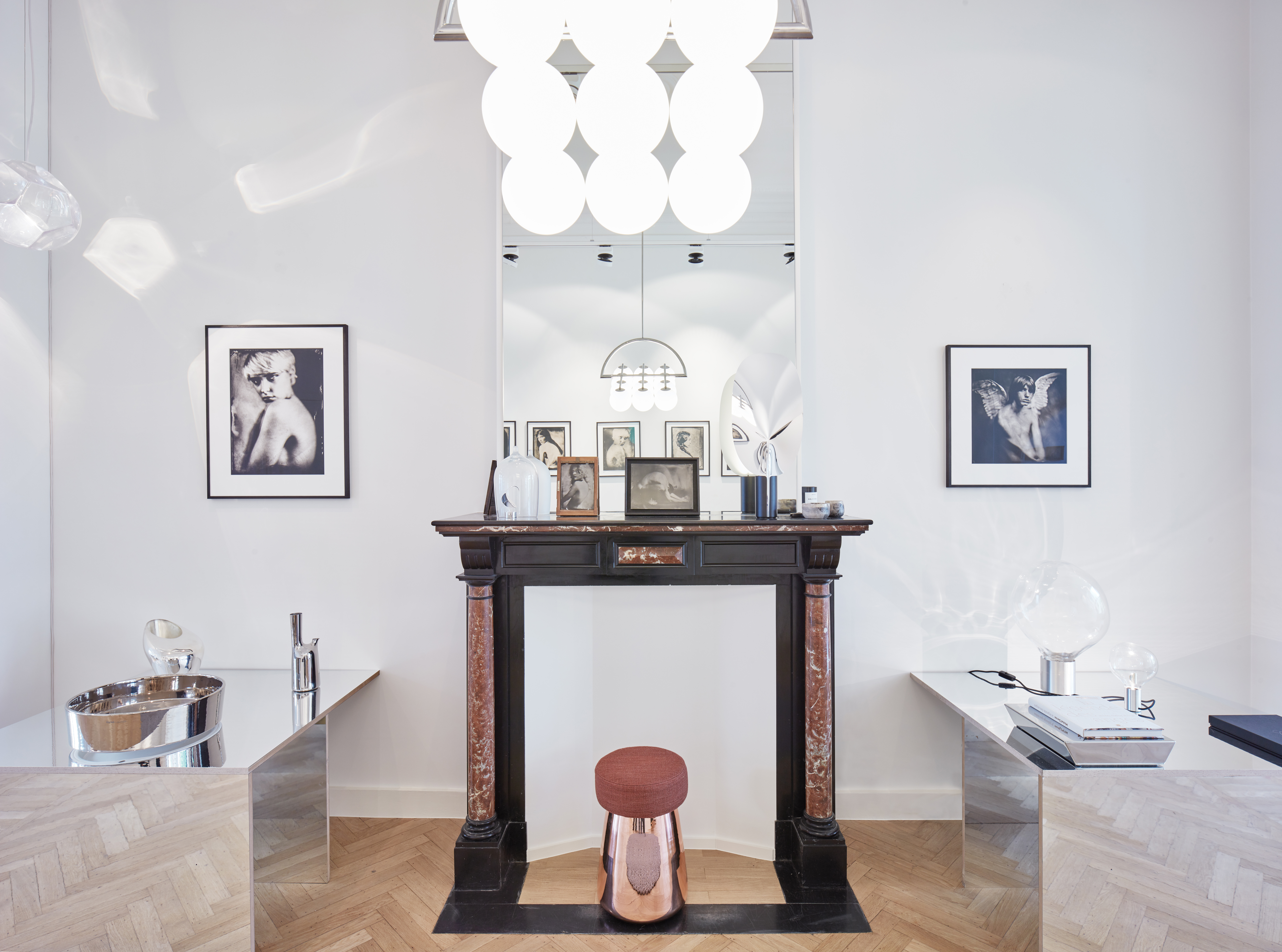
Season III – Silver Edition, design & Silvano Magnone, handmade photography, Spazio Nobile, Brussels (BE), 24.11.2016-19.2.2017, www.spazionobile.com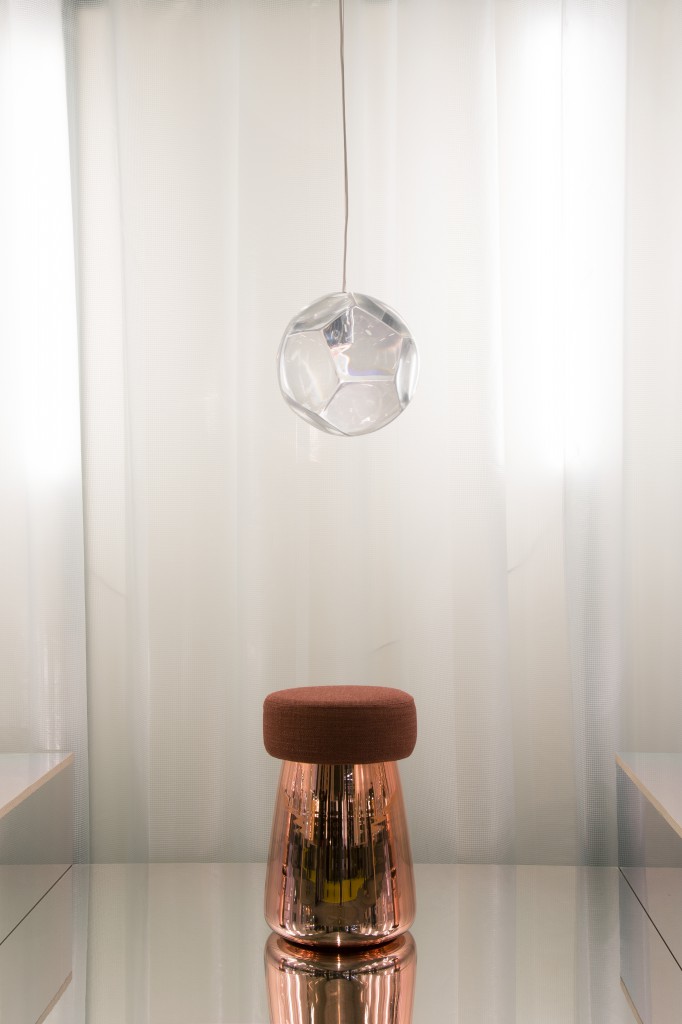

Articles you also might like
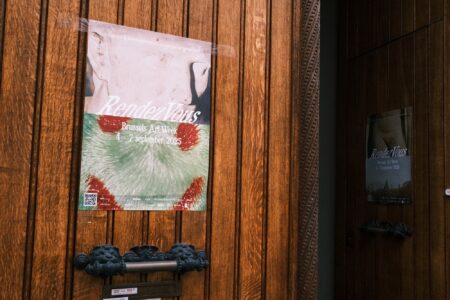
RendezVous – Brussels Art Week kicks off the city’s fall art season with nearly 100 participating venues across the city hosting events, exhibitions, and talks all weekend long.
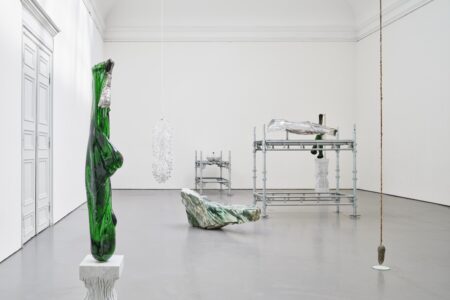
The Bittersweet is a solo show by Åsa Jungnelius at The Royal Academy of Fine Arts in Stockholm. The exhibition is on view between August 22-October 3, 2026.
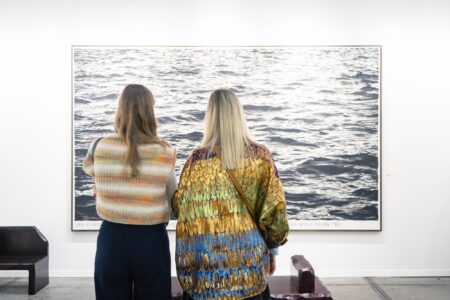
Art Brussels opens its doors today for its 42nd edition. The annual contemporary art fair takes place at Brussels Expo and includes 138 international galleries plus a host of special events, exhibitions and prizes. Read for more details.
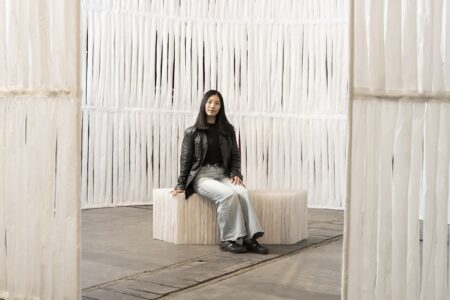
Spazio Nobile is pleased to present The Lunisolar House by Taiwanese artist Pao Hui Kao in the Horizons section of Art Brussels. In this mesmerising piece, Pao Hui Kao invites us to reimagine the home as a delicate threshold, a shelter shaped by light, breath, silence and vulnerability, rather than a fortress. Using humble yet transcendent materials such as folded tracing paper and rice glue, the artist has created a space that is both architectural and meditative: a sanctuary without walls; a chapel without doctrine; a horizon where fragility is transformed into a new form of strength and beauty.