

Garance Primat: A Living Collection
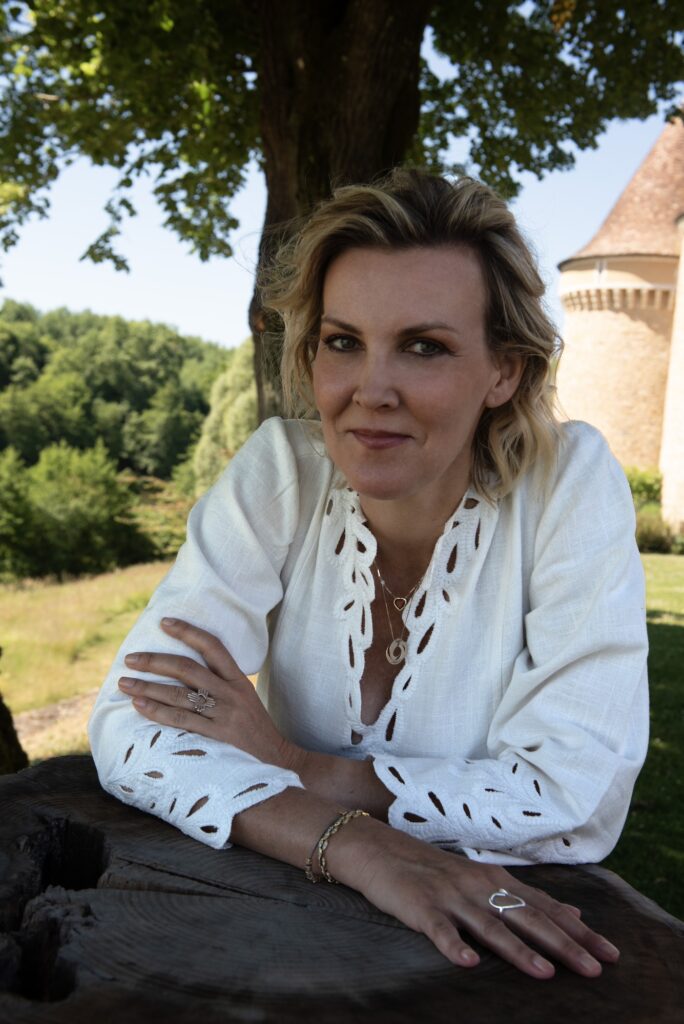
French collector and entrepreneur, Garance Primat, sees art as a way to reconnect us with our origins, draw us closer to our shared humanity and invite us to reconsider our place in the world. At the Domaine des Etangs, she has created an environment that merges art and nature in an evolving, intuitive way that allows people a space to do just that.
For Garance Primat, collecting is less about possession than about care. Over five years, she has transformed her family’s estate, the Domaine des Étangs, into a place where contemporary art, hospitality, agriculture and biodiversity are conceived as a single whole, with the dragonfly, a sentinel of ecosystem health, as the emblem of her collection. Following her book RACINES / ROOTS and the exhibition it inspired at the Fondation Opale, she spoke to TLmag about the vision behind her collection, the dialogue with her sister Bérengère’s, and the projects ahead.
TLmag: What led you to start collecting art? Was there an artist and work that you were first drawn to?
Garance Primat: I did not initially think of myself as a collector. When I was young, I travelled extensively and brought back objects, artworks and pieces of craftsmanship, particularly from Australia and the United States. They entered my life intuitively, as memories of encounters, cultures and different ways of understanding the world.
My interest in contemporary art developed more fully when I began transforming the Domaine des Étangs. I was looking for works for the château, but also for pieces that could respond to the landscape and the history of the place. I chose them with my heart, my emotions and my senses, rather than according to a predetermined strategy. Only gradually did I recognise a thread running through these very different works: the elements, our origins and the bonds between humanity and nature. The vision emerged through the collection itself. In a sense, the works revealed it to me.
TLmag: Can you talk a bit about your vision of collecting – how you approach it, particularly within the context of nature and the environment?
G.P.: For me, collecting is not about possession. It is about forming relationships and assuming responsibility for what has been entrusted to us. I often say that we are all temporary inhabitants of this Earth. The same is true of an artwork: we care for it, enable others to see and experience it, and eventually pass it on.
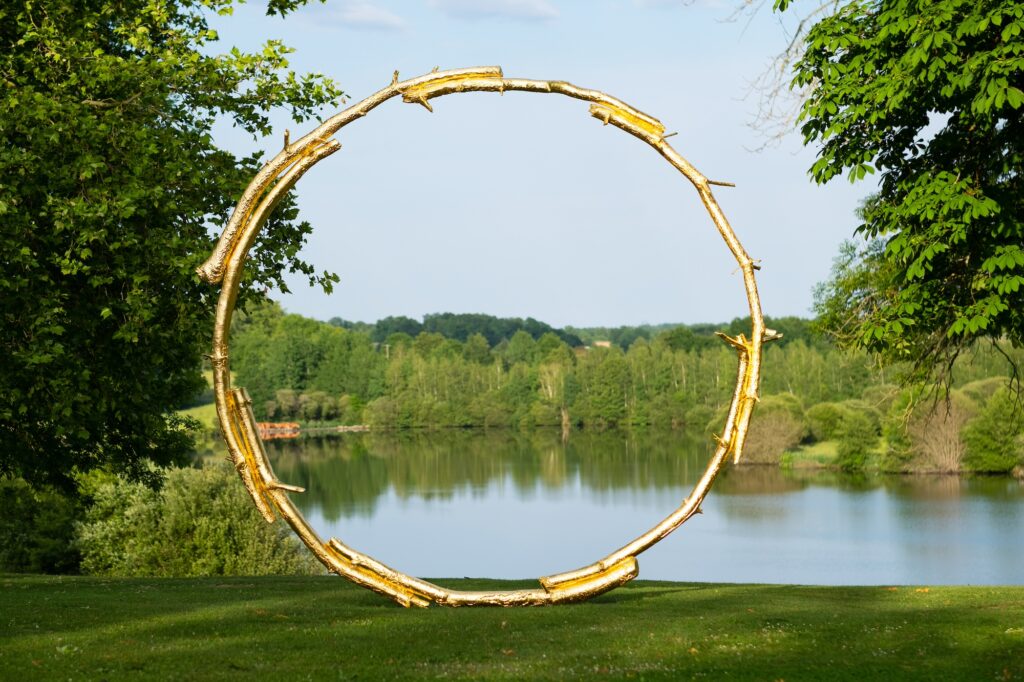
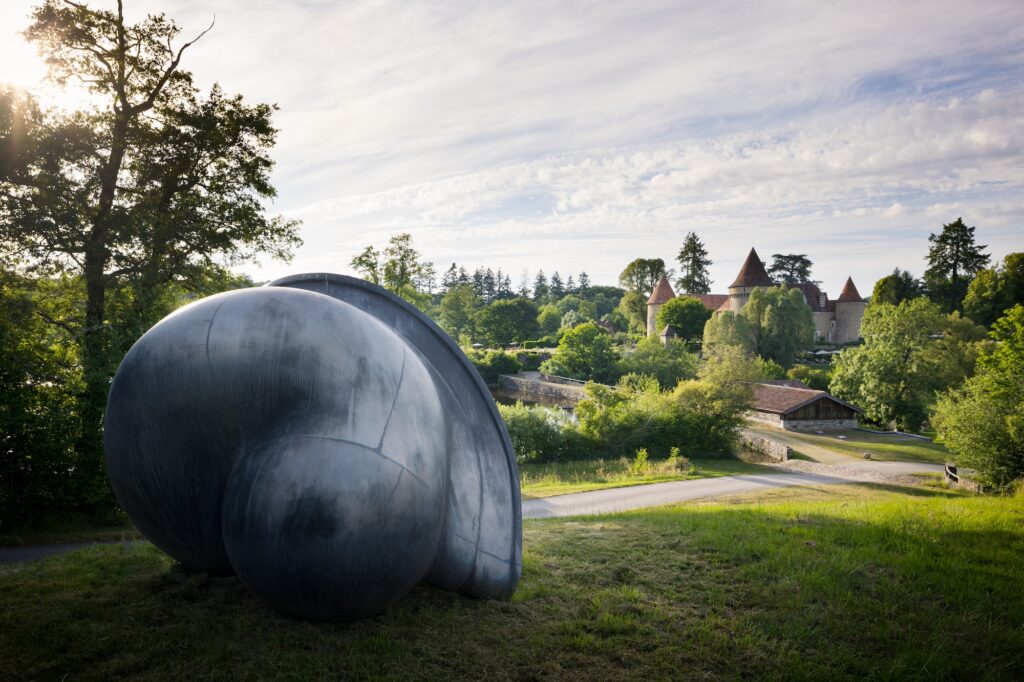
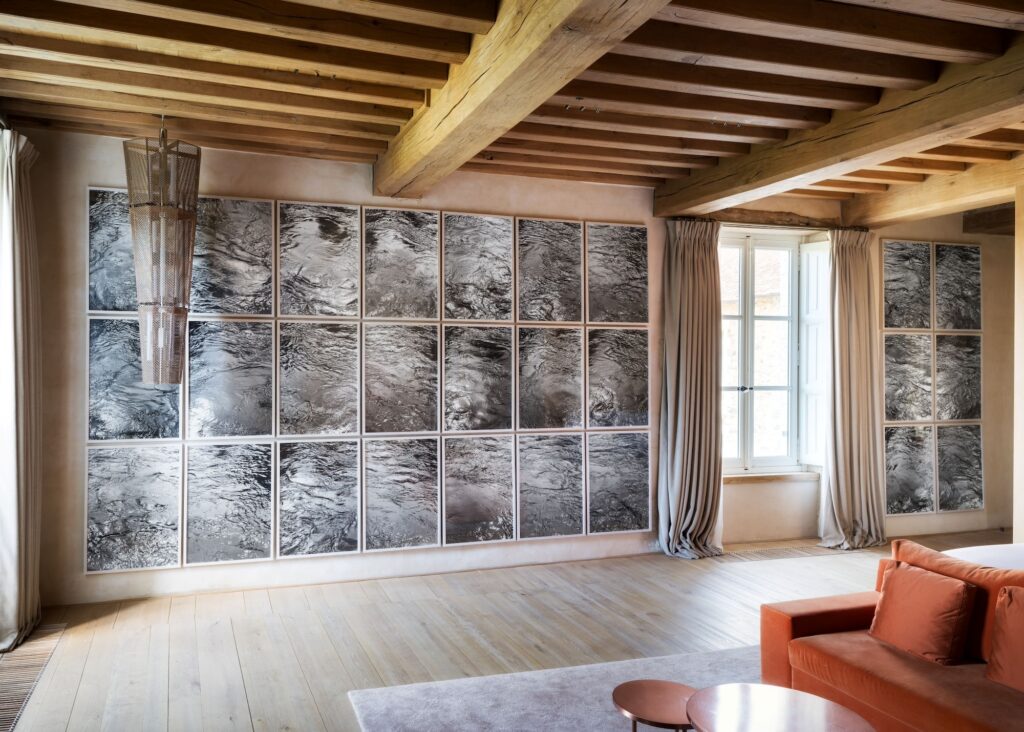
My response to art is physical and intuitive. A work must stir something in me before I try to understand it intellectually. Over time, I realised that many of the artists in the collection explore matter, time, natural resources and the invisible forces that bind us together. At the Domaine des Étangs, art is inseparable from its surroundings. An artwork may be encountered alongside moving water, shifting light, the flight of a bird or the silence of the forest. Nature is not a backdrop; it is the first creator and an active presence in the experience. In this context, collecting becomes an exercise in attention. It sharpens our perception, renews our awareness of the natural world and reminds us that we are part of something larger than ourselves.
TLmag: What led you to transform your family’s property, Domaine des Étangs, and renovate it to create its unique mix of hospitality, luxury, nature and art? How many years did it take to bring it all together?
G.P.: The Domaine des Étangs is deeply connected to my childhood and my family. When I took responsibility for it, I felt my role was not simply to preserve a property, but to care for a living place with its own history and help it continue to evolve. My wish was to open it to others and share its beauty without erasing its soul. The project grew gradually around a holistic idea of hospitality. Art, architecture, landscape, food, well-being, agriculture and craftsmanship were never conceived as separate elements, but as parts of a coherent whole.
The restoration required patience, because it was essential to respect the buildings, materials and expertise embedded in the site. At the same time, I wanted the Domaine to be firmly rooted in the present, through contemporary art, ecological awareness and a renewed relationship with the land.
I do not think a place like this is ever truly finished. Most of its development took place over five years, yet it continues to change through new works, people, ideas and environmental initiatives. The aim is not to reach a fixed conclusion, but to maintain harmony while leaving room for growth.
TLmag: Are the exhibitions at Domaine des Étangs open to the public or are they only for the guests?
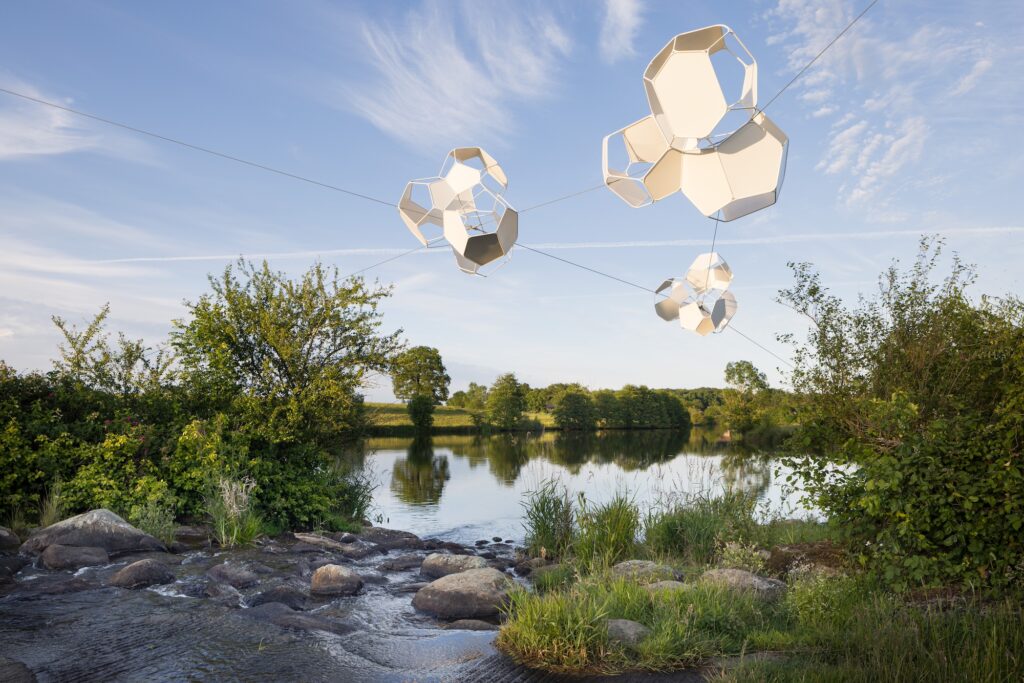
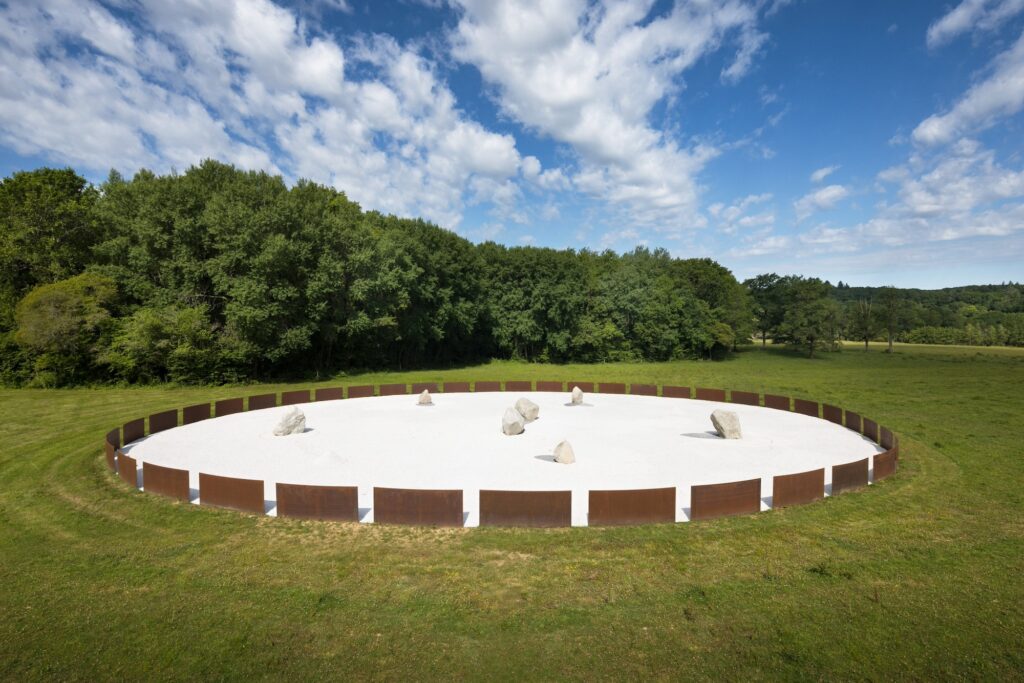
G.P.: The collection is accessible to people who are not staying at the Domaine des Étangs. The Art & Nature Escapade is open to the public, but visitors need to contact the Domaine and arrange their visit in advance. The experience unfolds across the estate, as artworks converse with the architecture, ponds, forests and shifting light. It offers a way to discover the collection in situ, with art and landscape enriching one another.
TLmag: Talk about your love of nature and the environment, and your dedication to championing sustainability and environmental activism.
G.P.: Nature has always been a source of balance, knowledge and inspiration for me. I grew up in a large family, close to the natural world, and was taught to recognise beauty within us and around us. From an early age, I understood that there is no greater creator than nature, with its constant capacity for renewal and adaptation.
My engagement stems from that sense of wonder, but also from a profound sense of responsibility. Sustainability cannot be reduced to a message or a single initiative. It asks us to reconsider how we inhabit places, cultivate the land, consume resources, protect biodiversity and share knowledge with future generations.
At the Domaine, this means bringing culture and agriculture into conversation, caring for the soil, water and forests, and developing more meaningful ways to assess biodiversity. Through my fund, hosted by the Fondation Didier et Martine Primat, I also support projects in nature conservation, education, scientific research, art and sustainable living. Art has an important role in this process. Facts are essential, but art reaches us in another way: it awakens the senses, shifts perspectives and opens our imagination to other possible futures.
TLmag: When did the dragonfly become your symbol?
G.P.: The dragonfly gradually became the emblem of the collection and a powerful expression of the values closest to me. For me, it represents the balance of life and of the world. It is also a remarkable indicator of ecosystem health, because it depends on the quality of every element in order to live and thrive. Water, earth, air and light are all essential to its existence.
This symbolism resonates with the philosophy of the collection and the Domaine des Étangs, where art and biodiversity are intimately linked. The Domaine is one of the scientific monitoring sites for dragonflies in mainland France, as it provides the conditions they need to flourish. Their presence tells us a great deal about the state of the environment and the delicate conditions on which life depends. The dragonfly therefore became a natural emblem for the collection. It evokes transformation, adaptability and harmony, while reminding us of our responsibility to protect the fragile systems that sustain us.
TLmag: You and your sister Bérengère have both built significant collections, and your respective projects have grown into public cultural spaces. How has growing up together shaped the way you each look at and collect art — and do you see a dialogue between your two collections, despite their very different focuses?
G.P.: Bérengère and I share common roots. We grew up in a large family where art, nature, curiosity and travel were very present. We were both taught to appreciate beauty and to remain close to the natural world. At the same time, we developed distinct sensibilities. Bérengère has built an extraordinary and deeply focused collection of Aboriginal Australian art, while my own collection brings together modern and contemporary art from different cultures, alongside minerals, objects and books. Despite their different focuses, both collections reflect on origins, our relationship with the Earth, the transmission of knowledge and the ties between human beings and their environment.
The first significant dialogue between our collections took place with Resonances at the Fondation Opale, a unique European cultural centre for contemporary Aboriginal art founded by my sister. The exhibition brought Aboriginal artists into conversation with figures from the international art scene, drawing on works from both collections. Structured in five chapters, it explored the fundamental question of humanity’s place in the universe. More recently, this exchange continued with RACINES / ROOTS, offering a broader and more personal reading of my collection. I see our projects as distinct yet connected, like branches growing from shared roots. Their dialogue is grounded in mutual respect and in our common belief that art can build bridges between cultures, generations and different ways of seeing the world.
TLmag: You also published a book at the time of the exhibition RACINES / ROOTS. Can you tell us a bit about this project and what it meant for you to put it together?
G.P.: The project began when Five Continents Editions invited me to create a book about the collection. I imagined the book as an exhibition in its own right: a personal exploration of the works and an attempt to reveal correspondences across periods, cultures and artistic practices.
To express the emotions and intuitions behind the collection, I began reflecting on language itself. Because words are always open to interpretation, I wanted to return to their roots and explore their original meanings. Seven words gradually emerged, seven like the days of the week: Create, One, Earth, Nature, Man, Matrix and Origin. Together, they form a sentence: “Create the One on Earth that is the Nature of Man and our Original Matrix.” They gave form to something I had long felt: an invitation to rediscover what binds us and to live in greater harmony with one another and with our shared humanity. Rather than organising the works chronologically or geographically, I brought them together through affinities and echoes, allowing a more intuitive and universal narrative to unfold.
This journey became RACINES / ROOTS, a magnificent book published by Éric Ghysels and Five Continents Editions, with a preface by Frédéric Lenoir. It is both an exploration of the collection and a meditation on where we come from, our bond with nature and what unites us beyond our individual histories.
The exhibition at the Fondation Opale grew out of the book. Developed with curator Samuel Gross, it translated this initial reflection into a physical and sensory experience. Sixty-four selected works unfolded across seven spaces, each corresponding to one of the seven words.
It was deeply moving to see a project conceived through language and images take on another dimension in the gallery. The book offers an intimate and lasting journey, while the exhibition allowed visitors to encounter the relationships between the works directly, through their materials, scale and presence. For me, art can reconnect us with our origins, draw us closer to our shared humanity and invite us to reconsider our place in the world.
TLmag: What’s ahead for you? Are you working on any new exhibitions or projects for this fall/winter?
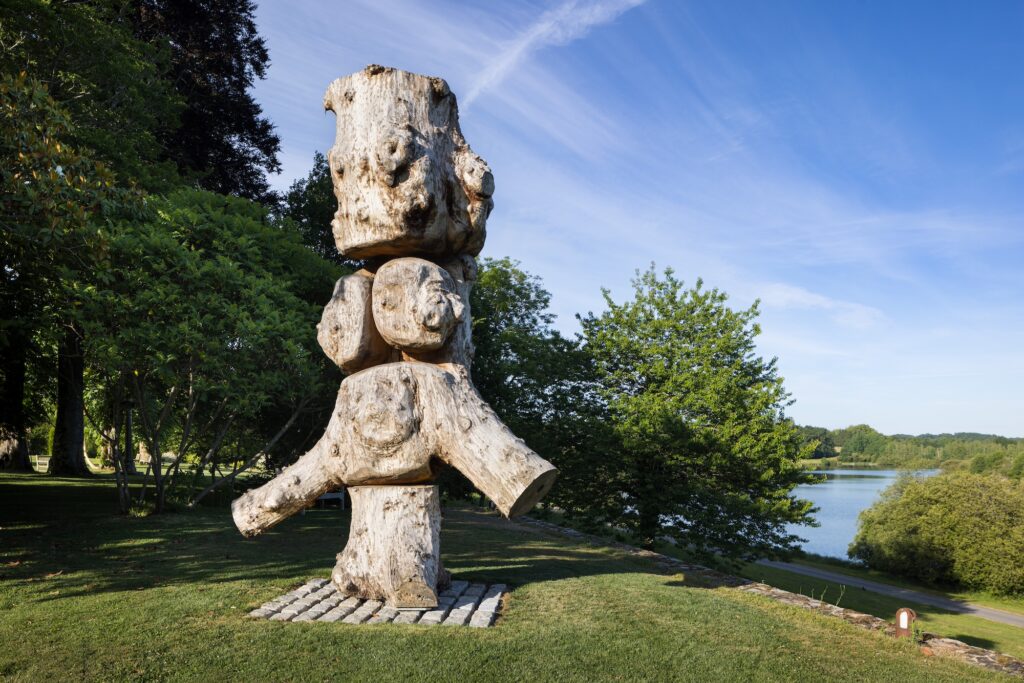
G.P.: We are currently developing several projects that show how art can renew the way we perceive and care for our environment. At the Domaine des Étangs, we recently welcomed two artists in residence. Duy Anh Nhan Duc developed Domaine des Étangs’ Trees following his encounter with the estate’s forests. Leaves, wood, earth, rocks and water gathered on site became the materials and palette of his work, revealing the colours, textures and memories contained in the trees and soil. Vincent Fournier created a series of photographs, Primat Sidera, from the Domaine’s existing ecosystem. He imagined a planet analogous to Earth, where different climatic conditions have transformed plant life. Each real species found on the estate is given a fictional counterpart, creating a dialogue between botanical observation, scientific research and speculative imagination.
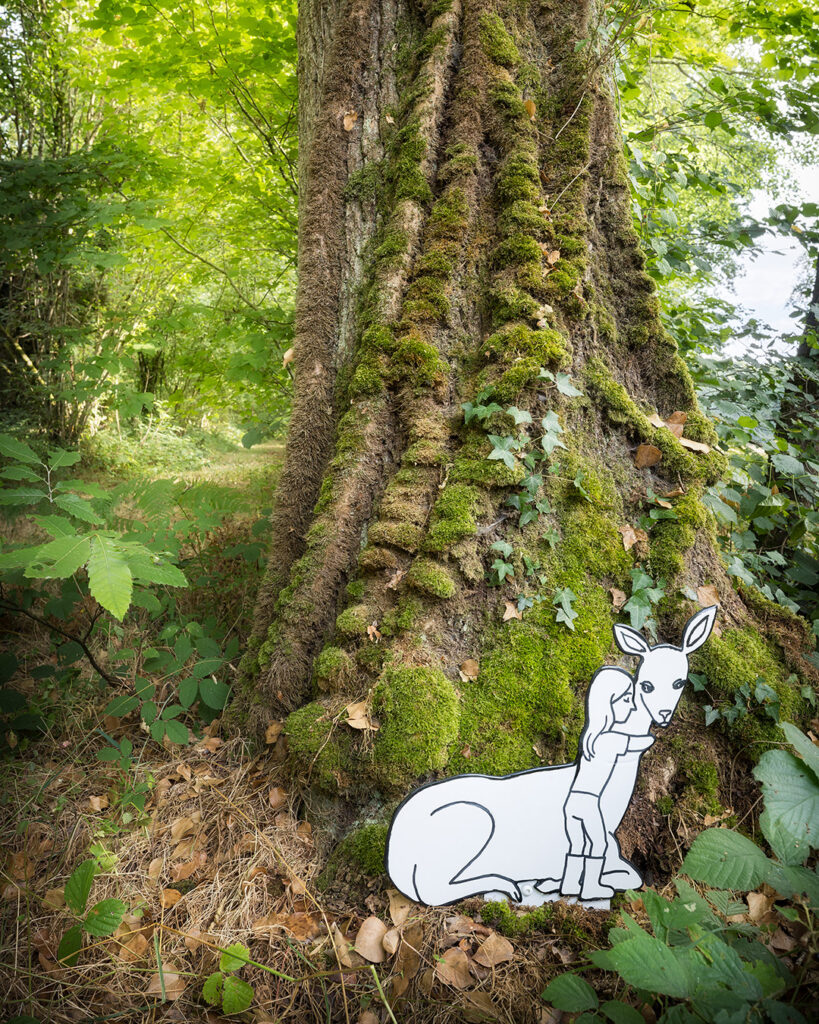
Through my fund hosted by the Fondation Didier et Martine Primat, we have also begun a fourth partnership with the International Cité of Comics and Images in Angoulême. We are developing a second illustrated trail with François Olislaeger, extending the conversation between graphic storytelling, art and the environment.
The first trail, Le Temps des Étangs, is already in place at the Domaine. Visitors follow it with a small book illustrated by the artist, which accompanies them through the landscape and allows reality and fiction to meet. The second trail will continue this artistic and sensory approach, offering another way to observe the estate and notice the many forms of life it shelters.
We are also designing a new website that will present the full scope of our activities and the projects we support. It will bring together art, culture and publishing with agriculture, biodiversity, hospitality and well-being. These initiatives take different forms, but all share a commitment to creating, protecting and passing on.
At the same time, we are developing a broader approach of renaturing and rewilding at the Domaine des Étangs. The aim is to give natural processes more room, restore ecological balance and strengthen biodiversity across the estate. This work builds on the inventories and indicators already established, which help us understand the condition of the ecosystems and guide the management of agricultural and human activity.
These projects complement one another. Art can transform the way we look at our surroundings, while renaturation and rewilding turn that awareness into tangible action. The Domaine is becoming a place where artistic creation, scientific observation and ecological regeneration can mutually enrich one another.
The word “culture” comes from the Latin colere: to cultivate, to inhabit and to care for. This etymology brings us back to a few essential questions: What kind of world do we want to inhabit? What do we wish to care for? What do we want to cultivate and allow to grow? Perhaps the first step is to remember that human beings are not separate from nature. In caring for the world around us, we also care for ourselves and reconnect with what is most fundamental in us.

Articles you also might like

Yvon Lambert spent more than five decades shaping the international contemporary art scene through collecting, publishing, and close relationships with artists. Together with his daughter Eve Lambert, he reflects on a lifetime dedicated to art, literature, and artist’s books.

London-based ecoLogicStudio presented Glacial Drip: a biotechnological landscape that brought the biodiversity of the Alps into the gelato of the future. The project took place between January 18th to 22nd, 2025.

For TLmag39: The Culture of the Object, studio d-o-t-s explored what agrarian traditions can teach design, looking at the work of Emma Brushi and Fernando Laposse, both of whom are designing and making objects in collaboration with local farmers and crops.

This interview with Thierry De Cordier originally appeared in the A/W 2021 issue of TLmag36: All is Landscape. De Cordier’s exhibition “Passe Montagne” is on view at Xavier Hufkens Gallery in Brussels through October 14, 2023.