

Estelle Yomeda: Animal Vegetal
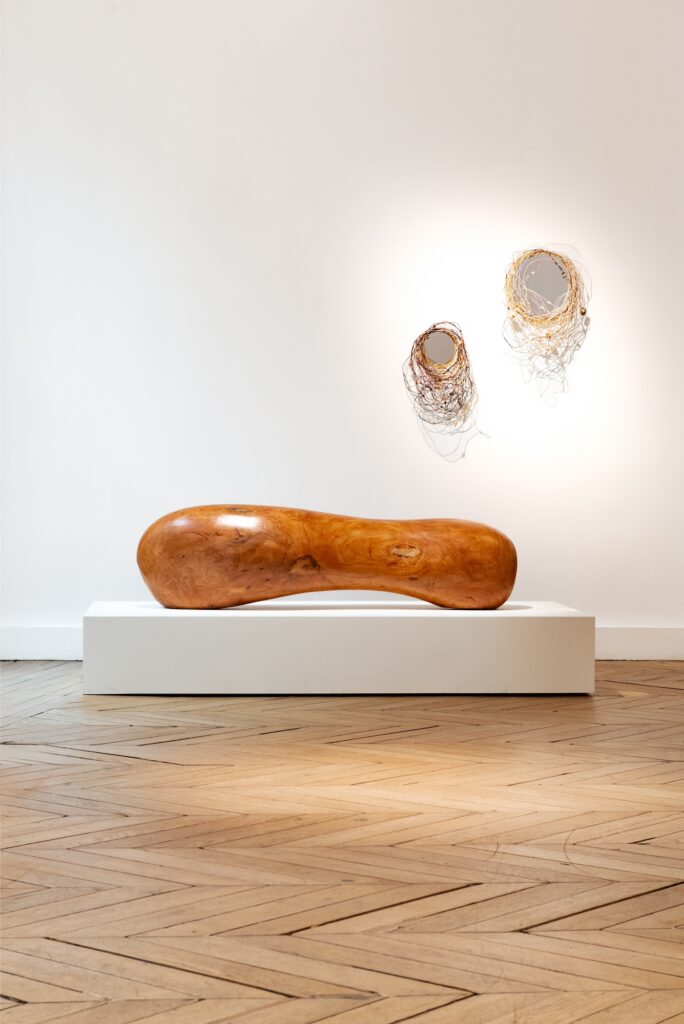
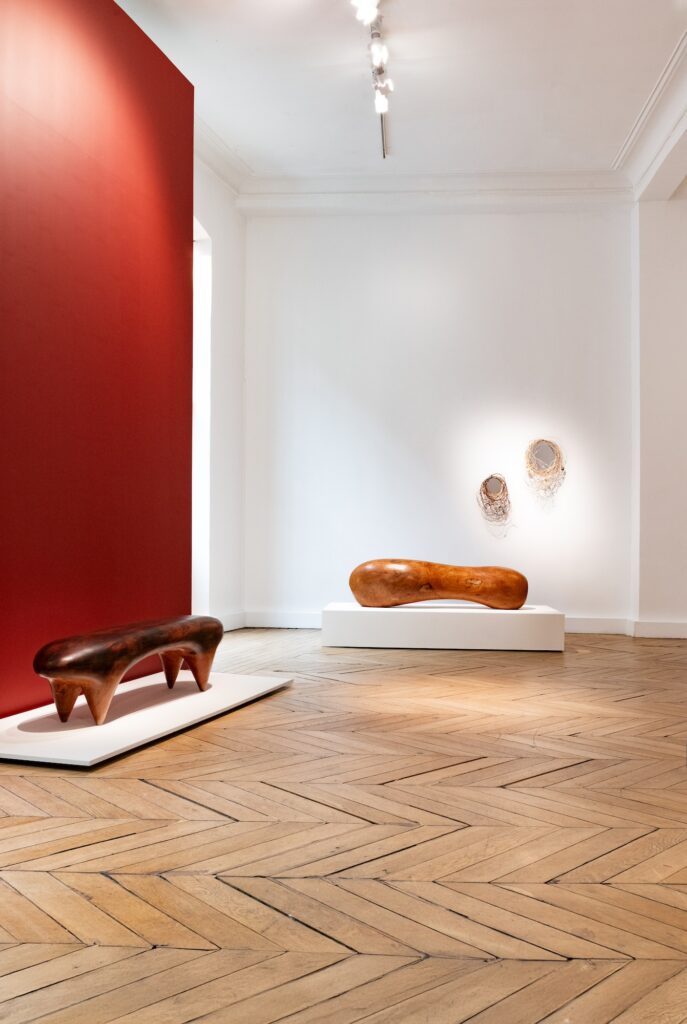
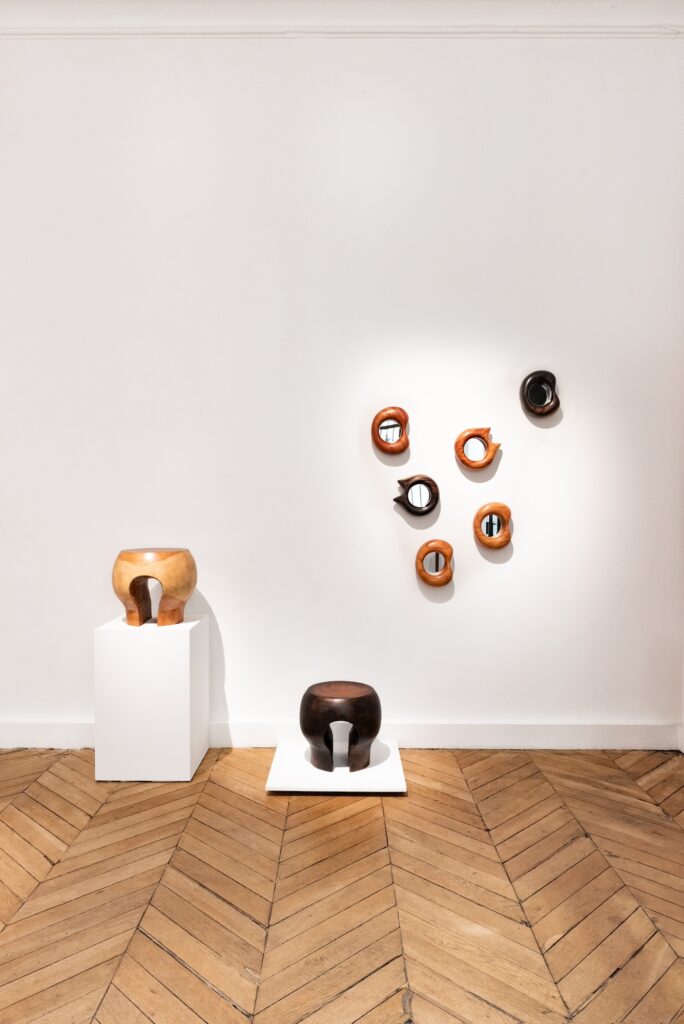
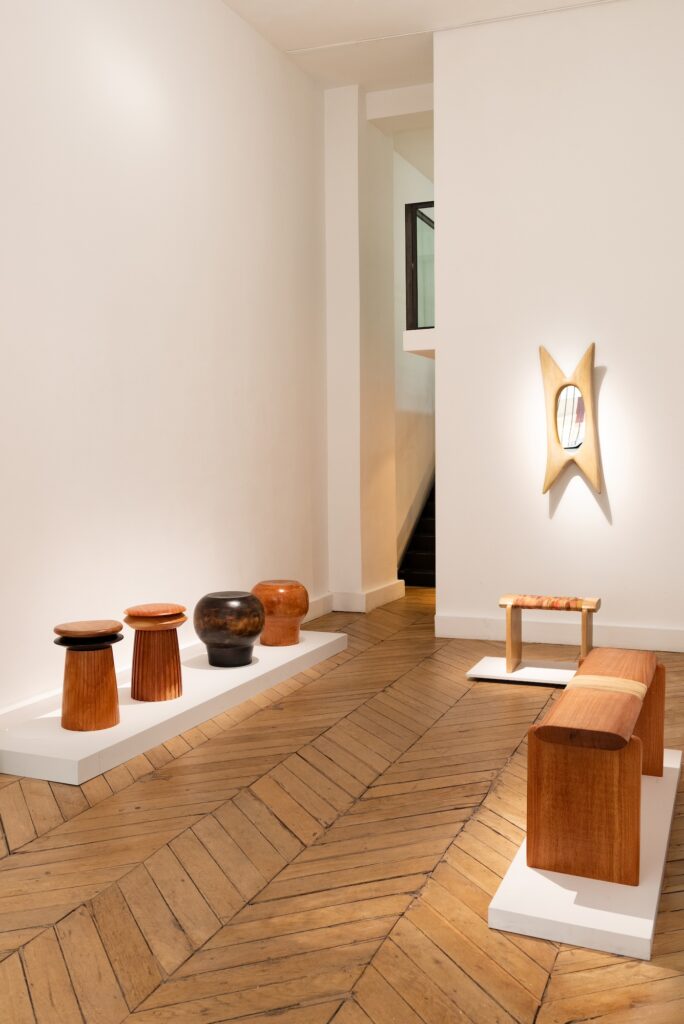
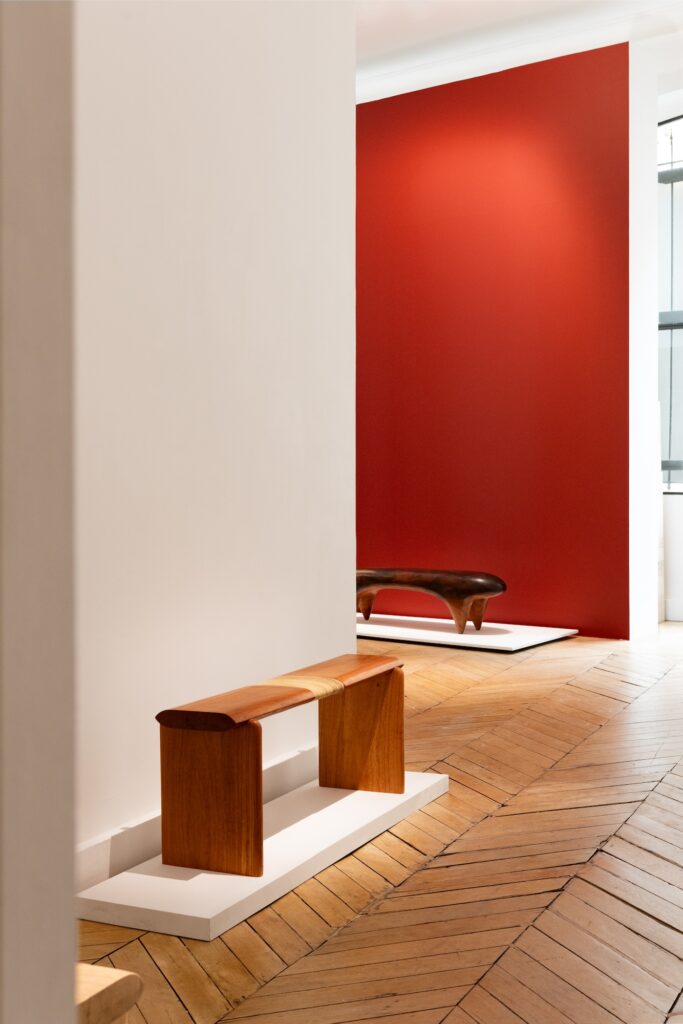
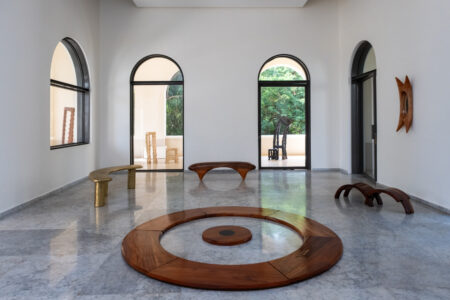
From November 6, 2025 – January 17, 2025, Galerie Maria Wettegren presents Animal Vegetal, a solo exhibition of work by Estelle Yomeda. The Paris-based designer presents a series of sculptural furniture designed and handmade in collaboration with craftsmen in Togo, West Africa.
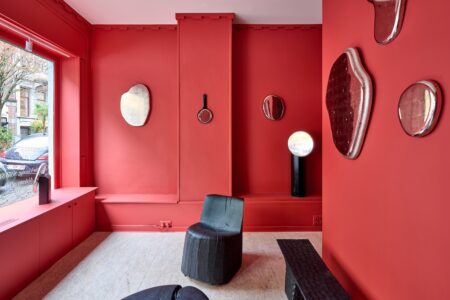
A deep, earthy terracotta red wall sets the tone for Animal Vegetal, the solo exhibition by Estelle Yomeda on view through January 17, 2026 at Galerie Maria Wettergren. The colour is one that is found in the rich, lush soil of Togo, the small West African country where Yomeda’s father was from, and where the designer has been spending extended time for the past several years. Over a decade ago, while in Togo, Yomeda became inspired by the lush forests and the ancestral knowledge of wood, and started on a path towards designing objects and furniture using various types of wood found in the country. “I was very inspired by the different colours and grains of the wood here, and what could be made from them,” she explains. From a dark, noble mahogany to the clear, lighter melina wood, Yomeda designs her pieces in harmony with the material itself. “Every time it is a revelation,” she says about the process of transforming the raw, felled wood into a new piece. “It is a very rich experience.”
Born and raised in Strasbourg, Yomeda studied visual arts at university, and was always, from a young age, interested in the handmade. While receiving her degree, she was also working in the atelier of the Opéra national du Rhin, in Strasbourg, making costumes and learning how to make shoes by hand. After university, she moved to Paris, where she was part of the team at Yves Saint Laurent developing shoe prototypes for the runway. “It was fantastic,” she says of the experience, but she also knew she had a lot of her own ideas as well. In 2000, she began designing her own shoes, under her eponymous brand, Estelle Yomeda. A shop in the upper Marais, between 2007-2011, just when that neighbourhood was starting to flourish, established her as a recognized name in fashion.
After the boutique closed, she took some time to reflect on the next steps, all the while still designing, making and envisioning creative ideas. She went to Togo to reconnect with family, and her roots, and here she began her transition from shoes towards functional and sculptural objects and furniture. It was not a shift so much as an intuitive transition. “For me it was an extension – with only the scale changing. When you work on shoes, you deal with volume, colours, materials, shape and wood, so it was not so strange for me to move into design – it was a fluid transition,” the designer explains.
Meeting the craftsmen and learning more about history of woodworking in the county led her to start making bowls and plates, a collection of homewares that was featured in several boutiques in Paris, including the Quai Branly Museum. Through a platform titled Kente Project Art Lab, which she established in 2018, and named after the important fabric that originated in Togo and Ghana, she was also exhibiting her work in various gallery spaces and exploring other mediums including textiles, jewellery and accessories.
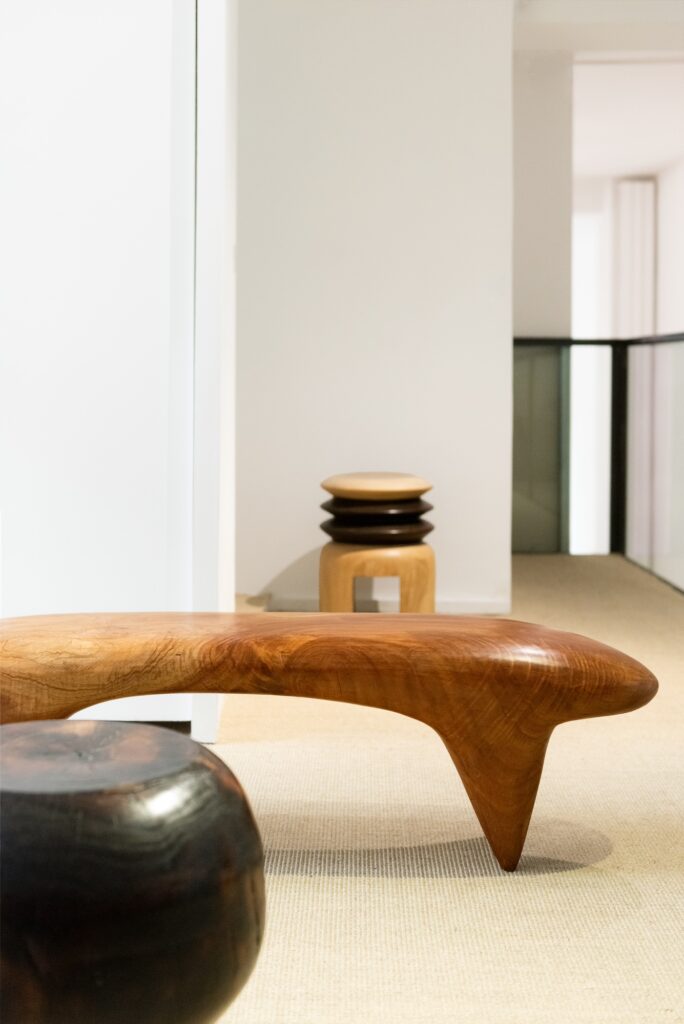
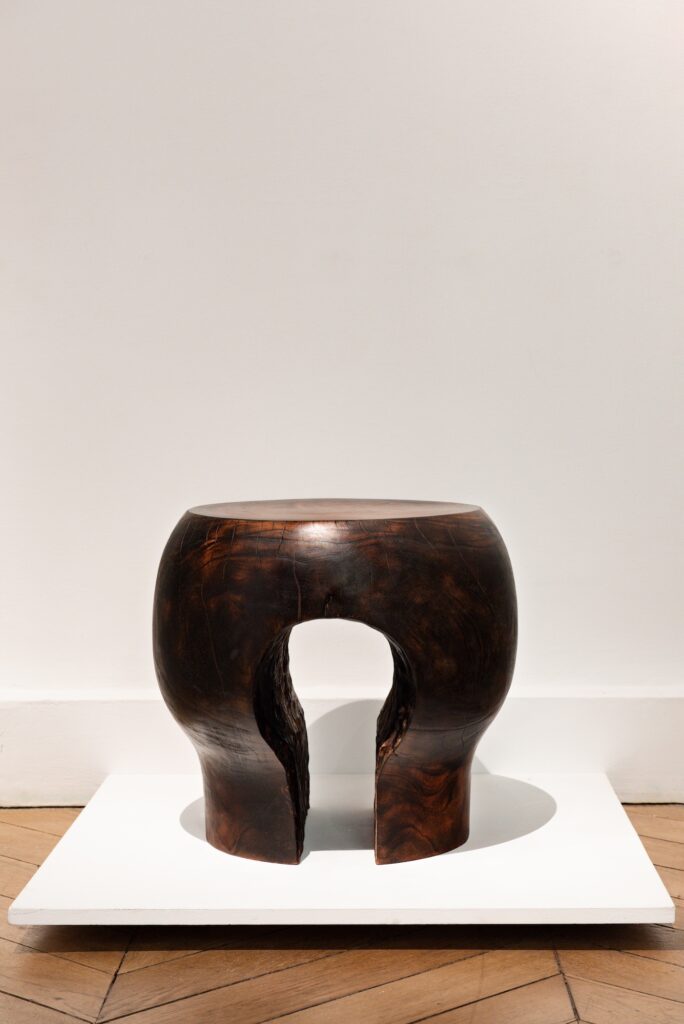
In 2021, she designed her first furniture piece and has been focused on this for the past several years. Animal Vegetal brings together a selection of pieces, from small stools to benches and coffee tables. Sculptural, sensuous shapes are designed to highlight the unique grain of the wood. Sokodé, made with Neem wood, which is known to be an important medicinal tree, has a smooth exterior surface that shows the subtle tones of the wood, while underneath you can see the hand of the artisan, small markings that connect to its making. Yomeda’s furniture plays with ideas of duality as well – void and form, light and dark, smooth and textured surfaces, among others. She begins by drawing on the wood, to sketch out the shape and then works closely with the craftsman has the form is realised. The titles of the furniture are also rooted in their place – named after Togolese towns. “To inhabit the world, one must also be inhabited by the world. The names of the objects conceived and designed by Estelle Yomeda and produced by artisans in Lomé bear witness to this. Lomé is the name of the Togolese capital. Sokodé is the name of the largest city in the central region. Aného is a coastal town, formerly a Portuguese slave market called Petit-Popo. Assigamé is the largest market in Lomé. Afa refers to the Vodou divination system. Zo evokes zoology. A subtle geography thus emerges between the different pieces of the exhibition. A hidden Afro-European influence returns and detours through the objects,” writes Seloua Luste Boulbina in the exhibition catalogue.
In addition to Animal Vegetal, Yomeda is exhibiting in Design in West Africa: Unity in Multiplicity, (November 30, 2025-March 15, 2026), an exhibition at the Palais de Lomé, a beautifully renovated palace in the capital of Togo that is now a cultural centre. Design in West Africa: Unity in Multiplicity, commissioned by Sonia Lawson, Director of the Palais de Lomé, and curated by Nicolas Bellevance-Lecompte, celebrates the creative vitality of West Africa through design, art, and architecture with work by over 15 West African artists.
Animal Vegetal is on view at Maria Wettergren through January 17, 2026.

Articles you also might like
From February 12-15, NOMAD design fair returns to St. Moritz for its ninth edition, transforming the recently renovated Villa Beaulieu—formerly Klinik Gut—into an intimate showcase for contemporary art, collectible design, and jewellery.
The Palais de Lomé in Togo presents “Design In West Africa: Unity in Multiplicity,” a ground-breaking exhibition bringing together 23 artists and designers from across the region and curated by Nicolas Bellavance-Lecompte.
Spazio Nobile Studiolo presents a selection of Quentin Vuong’s alchemical Mercure mirrors, in conversation with sculptural wood forms and collectible furniture by Kaspar Hamacher, as part of the Season XXXVI of Spazio Nobile Gallery. The exhibition is on view through January 18th, 2026.
On the occasion of the 2025 Venice Architecture Biennale, designer and creative consultant Mehdi Dakhli curates Intrecciata Venezia, a contemplative look at Venice’s history as a center of cultural exchange, presented at Lo Studio.